
Archives d’Auteur: Pascal Lamy
Il Mulino – civilizzare la globalizzazione, un’ambizione per l’Europa
L’integrazione europea vive oggi un momento difficile. Certo, non è mai stata un lungo fiume tranquillo, come il Po di Paolo Rumiz. Ha avuto le sue fasi di piena e di secca, le sue rapide, i suoi meandri.

Tribune – The EU needs a fresh boost… fast !
The participants of Notre Europe – Jacques Delors Institute 2014 European Steering Committee underline that the European authorities appointed in the wake of the elections in May 2014 have a historic task ahead of them, via a final declaration entitled: “The EU needs a fresh boost… Fast!”. This Tribune has been published in the European and […]

Transparency International – Speech in Athens
The question I want to address this evening from a global perspective is the following: how is Greece doing in the combat against bribery? « Better but still a very long way to go » would be my short answer. Greece ranks n° 69 among countries in the last CPI, as compared to 80 last year and […]
World Policy Conference – Debate on Trade and Policy
Commercial affairs, in the broad sense of the term, have always been a central part of international relations and always interfered with security issues. In our day and age, as a result of globalization, economic exchanges have gone largely beyond commercial exchanges (services, capital flows, direct investments, etc.) and form a more and more tightly-meshed […]
Il Centro Studi sul Federalismo (CSF) -Civilizzare la Globalizzazione, un’ambizione per l’Europa
Pascal Lamy, laureato all’Institut d’Études Politiques, all’Hautes Études Commerciales e all’École National d’Administration, è stato Capo di gabinetto del Presidente della Commissione europea Jacques Delors dal 1985 al 1994, Direttore generale del Crédit Lyonnais dal 1994 al 1999, Commissario europeo (al Commercio) dal 1999 al 2004, Direttore generale dell’Organizzazione Mondiale del Commercio dal 2005 al […]
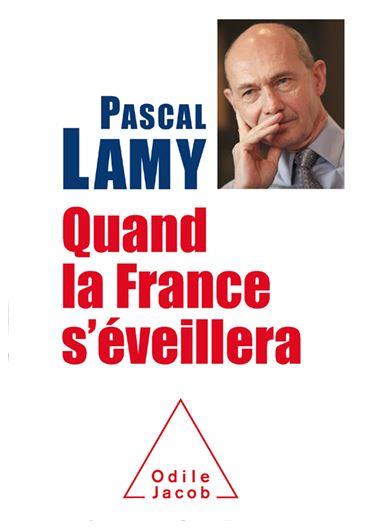
Quand la France s’éveillera
« Inviter les Français à regarder le monde tel qu’il est ; leur montrer que le monde est moins une menace qu’une chance ; les convaincre qu’ils ont tous les atouts à condition de briser le prisme à travers lequel ils lisent le monde et que briser ce prisme ne signifie pas renoncer aux spécificités […]
 Pascal LAMY